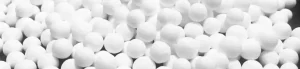
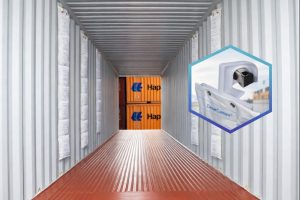
Today, guaranteeing water quality is essential for sustainability and regulatory compliance in many industrial sectors. activated alumina stands out as an invaluable resource in purification processes, offering effective solutions in areas such as drinking water treatment, the pharmaceutical industry and petrochemical processes.
What makes activated alumina unique?
Superior adsorption: Thanks to its high specific surface area, activated alumina is highly effective at removing contaminants such as fluoride, arsenic and heavy metals.
High chemical stability: It maintains optimal performance even under extreme pH and temperature conditions, adapting to the most demanding industrial environments.
Eco-friendly and reusable: This material is sustainable because it can be regenerated, reducing environmental impact and operating costs.

Success stories in industry
In regions with high levels of fluoride and arsenic, activated alumina has been essential to meet international standards, ensuring safe, high-quality drinking water.
Process: The water is filtered through alumina beds, where the contaminants are adsorbed on its surface. Once saturated, the alumina can be regenerated with specific solutions for reuse.
Companies in the sector have implemented activated alumina in ultrapure water purification systems, removing traces of heavy metals and other impurities critical to medicine manufacturing.
Process: The alumina captures impurities while being combined with advanced technologies such as reverse osmosis, achieving pharmaceutical-grade water according to international standards.
In the dehydration of gases such as methane or propane, activated alumina ensures the gases are free of moisture, protecting equipment and systems from corrosion.
Process: Wet gases pass through alumina beds, where water molecules are trapped in the pores of the material. It is regenerated by heating, restoring the capacity of the desiccant.
Regulatory compliance and assured quality
For water intended for human consumption, what is required is not a generic seal on the material, but that each product meets the standard for its category and the national health regulations:
It is the European standard for granular activated alumina used in the treatment of water for human consumption. It defines its characteristics and impurity limits.
In Spain, Royal Decree 3/2023 sets the technical and health criteria for drinking water and the products used to treat it. Each EU country has its own regulations.
Before using it in drinking water, ask the supplier for the batch certificate of analysis and the declaration of conformity with EN 13753.
Tangible benefits for industry

1. Lower operating costs
Activated alumina stands out for its regenerative capacity, which makes it an economically advantageous option for companies. Unlike other materials that require frequent replacement, this adsorbent can be reused many times through simple regeneration processes, such as alkaline solutions or heat treatment.
This translates into:
- Long-term savings: The initial investment in activated alumina pays off quickly thanks to its durability and reuse.
- Lower logistics costs: By minimizing the need to buy, transport and dispose of large volumes of new material, companies can significantly reduce their operating costs.
- Less downtime: Regeneration processes are fast and efficient, allowing operations to continue without long interruptions.
2. Environmental protection
In a global context where sustainability is a key pillar of competitiveness, activated alumina is an environmentally friendly solution. Its ability to be regenerated and reused minimizes industrial waste and helps meet corporate sustainability goals.
- Less solid waste: Unlike other disposable adsorbent media, regenerating alumina significantly reduces the volume of waste sent to landfill.
- Low carbon footprint: Because less new material has to be produced and transported, the associated emissions are reduced.
- Environmental compliance: Adopting sustainable materials such as alumina helps companies align with international standards such as ISO 14001 and corporate social responsibility (CSR) commitments.
3. Confidence backed by documentation
Working with documented material gives peace of mind to the plant, the end customer and the health authorities.
- Verifiable documentation: for drinking water, require alumina conforming to EN 13753 with a certificate of analysis for each batch.
- Reputation and trust: companies that can demonstrate the traceability of their materials gain credibility with regulators, customers and partners.
- Access to other markets: working with harmonized European standards makes it easier to sell and operate in other EU countries.
4. Better operating efficiency
In addition to the benefits mentioned, activated alumina offers exceptional efficiency in its industrial applications. Its superior adsorption capacity and chemical stability allow companies to optimize key processes, increasing productivity and reducing the risk of operational failures.
- Faster, more reliable processes: High adsorption capacity ensures contaminants are removed efficiently in less time.
- Protection of equipment and systems: In applications such as gas dehydration, alumina prevents equipment corrosion, extending its service life and reducing maintenance costs.
- Versatility across industries: From drinking water treatment to petrochemical refining, this material adapts to different environments and requirements, maximizing its value in different sectors.
5. Driving corporate sustainability

Integrating activated alumina into industrial processes not only benefits companies financially but also strengthens their commitment to sustainability. This is particularly relevant in markets where consumers and regulators increasingly value responsible practices.
- Support for environmental certifications: It helps meet goals related to the United Nations 2030 Agenda for Sustainable Development, such as access to clean water and sanitation (SDG 6).
- Better corporate reputation: Companies that adopt sustainable solutions gain recognition in their sector and build relationships of trust with their stakeholders.
Activated alumina: more than a technical solution
Activated alumina does not just solve technical problems: it adds value by combining sustainability, efficiency and process control. To remove fluoride and arsenic, the usual choice is activated alumina in 1-3 mm beads; see the other particle sizes on our page for activated alumina.
Want to know how to implement activated alumina solutions in your processes?
Write to us at info@ydrygroup.com for personalized advice or, if you prefer, contact us directly on WhatsApp.