The Clay is one of the most widely used desiccants in packaging and transport. Its name is simply the English word clay, and that is exactly what it is: natural bentonite-type clay activated to absorb moisture. In this guide we explain what it is, how much moisture it absorbs, what formats it comes in and when it is a better choice than silica gel.
Need Clay desiccant for your business?
PEM-HI and Tyvek® Clay sachets from 5 to 500 g and Cargo Pack for shipping containers. We help you choose the format and quantity.
See Clay desiccants and request a quoteContents
– What Clay is
– Properties of Clay
– How much moisture does Clay absorb?
– Clay formats
– Clay + calcium chloride
– What is Clay used for?
– Clay or silica gel
– How to calculate how much Clay you need
What Clay is
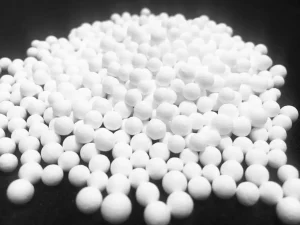
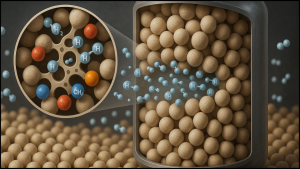
Clay is a natural bentonite-type clay desiccant, mainly made of hydrated aluminum silicates, activated so that its porous structure absorbs and retains moisture from the air. It comes as granules inside a sachet or strip, and it retains moisture without dripping.
Properties of Clay
- Economical: it is one of the options with the best cost/protection ratio for packaging and storage.
- Very effective at room temperature: this is its strong point. At high temperatures, above about 50 °C, it loses capacity.
- Natural and non-toxic: it is a clay, chemically inert towards most products.
- Dust-free: in Tyvek® sachets it releases no dust.
How much moisture does Clay absorb?
According to the technical data sheet of our activated Clay sachets, at 25 °C it adsorbs at least 9.1% of its weight at 20% relative humidity and 18.2% at 40%. The maximum moisture of the product at manufacture is ≤ 3.5% and its shelf life is 3 years. It complies with MIL-D-3464E.
To compare sachets of different materials, DIN 55473 unitsare used, which measure the absorption capacity of the sachet.
Clay formats
| Format | Sizes | Typical use |
|---|---|---|
| PEM-HI sachets | From 5 to 500 g | Boxes, packs and industrial packaging |
| Tyvek® sachets | From 30 to 120 g | Packaging that must stay dust-free |
| Clay Cargo Pack | Hanging strips | Shipping containers |
| Clay + calcium chloride Cargo Pack | Hanging strips | Containers on long, humid voyages |
Clay + calcium chloride
Calcium chloride greatly increases absorption capacity. That is why the mix of Clay and chloride is used in Cargo Pack for containers, where large amounts of moisture must be absorbed over weeks of voyage to prevent container rain. To compare both materials, read silica gel vs calcium chloride.
What is Clay used for?
- Packaging of goods: machinery, metal parts, furniture, footwear and textiles.
- Long-term storage in warehouses.
- Export and ocean freight in containers.
- Protection against corrosion, mold and bad odors caused by moisture.
Clay or silica gel
| Clay | Silica gel | |
|---|---|---|
| Cost | More economical | Higher |
| Temperature | Ideal at room temperature; loses capacity above about 50 °C | Performs better at higher temperatures |
| Food or pharmaceutical grade | Not the right choice | Yes, with the right packaging |
| Typical use | Packaging, storage and containers | Food, pharma, electronics and packaging |
More information on our pages for Clay y silica gel.
How to calculate how much Clay you need
The quantity depends on the volume of the packaging, the humidity, the temperature and the duration of storage or the voyage. You can make an estimate with our desiccant calculator and, for containers, see how many desiccants a 20 ft and 40 ft container needs.